PDF herunterladen

I will look at gardens as loci of economic activity in the late 18th and early 19th centuries. The primary focus of this section will be monastery gardens in Kyiv, renowned for their rich variety of trees and medicinal plants and for their involvement in economic activity, producing goods both for internal use and for sale. I will examine how these gardens were established and managed and how they functioned both as a space of material production and of meditation.
The next aspect I will address is private parks on noble estates. For this section, I will combine approaches from the history of art and design with those of environmental history. My key case study is Aleksandriia Park in Bila Tserkva, created in the late 18th and early 19th centuries at the behest of the Branicki noble family. The park’s creation and operation will form the core of my discussion of estate park design and its reception by 19th-century visitors (e.g. British physician Dr Robert Lee).
Finally, I am interested in gardens as objects of botanical fascination. This section begins with early descriptions of Kyiv’s gardens produced by imperial scientific expeditions and culminates in a case study of the University Botanical Garden in Kyiv. I will examine how imperial science operated in practice: how plants were collected and acquired (including the transfer of the first exotic specimens from the Kremenets Collegium after its closure by the Russian imperial government), how scientific networks functioned (for instance, through the exchange of seeds), and what ideological assumptions underpinned such institutions from an imperial perspective.
Recommended Reading
Dysa, Kateryna. Ukrainian Witchcraft Trials: Volhynia, Podolia, and Ruthenia, 17th–18th centuries. Central European University Press, 2020.
–. “From Indifference to Obsession: Russian Claim to Kyiv History in Travel Literature of the 18th–early 19th Century.” Kyiv-Mohyla Humanities Journal, no. 10 (2023): 193–213. https://doi.org/10.18523/kmhj270983.2023-10.192-213.
–. “The Holy Places of Kyiv as Sites of Interest for Travellers of the Long 18th Century.” In In Search of Centres: Early Modern Kyivan Christianities, edited by Ivan Almes, Svitlana Potapenko, Oksana Prokopyuk, Vitalii Tkachuk, and Valerii Zema. Böhlau, 2026.
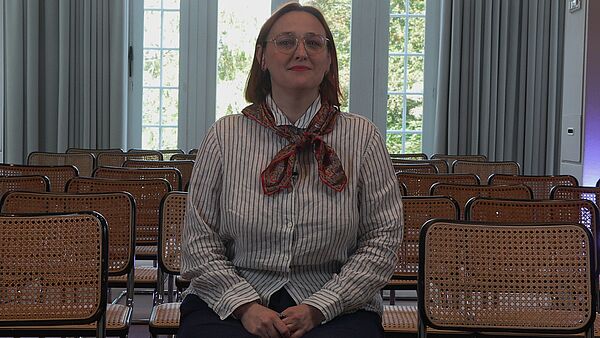
© privat
2026/2027
Kateryna Dysa, PhD
Professor of History
National University of Kyiv-Mohyla Academy
Born in 1977 in Moscow, Ukrainian
BA in History, National University of Kyiv-Mohyla Academy, MA in History and PhD in Comparative History, Central European University
Fellowship
VUIAS Fellowship abroad
Arbeitsvorhaben
A Cultural History of Parks and Gardens in Ukraine (Late Eighteenth–Nineteenth Centuries)
In my research, I focus on several contexts in which parks and gardens can be examined. I will begin with the garden as a symbol and metaphor. There is a substantial corpus of late Baroque Ukrainian poetry, sermons, and engravings that employ garden imagery, which I intend to analyse, placing them in dialogue with broader European traditions.I will look at gardens as loci of economic activity in the late 18th and early 19th centuries. The primary focus of this section will be monastery gardens in Kyiv, renowned for their rich variety of trees and medicinal plants and for their involvement in economic activity, producing goods both for internal use and for sale. I will examine how these gardens were established and managed and how they functioned both as a space of material production and of meditation.
The next aspect I will address is private parks on noble estates. For this section, I will combine approaches from the history of art and design with those of environmental history. My key case study is Aleksandriia Park in Bila Tserkva, created in the late 18th and early 19th centuries at the behest of the Branicki noble family. The park’s creation and operation will form the core of my discussion of estate park design and its reception by 19th-century visitors (e.g. British physician Dr Robert Lee).
Finally, I am interested in gardens as objects of botanical fascination. This section begins with early descriptions of Kyiv’s gardens produced by imperial scientific expeditions and culminates in a case study of the University Botanical Garden in Kyiv. I will examine how imperial science operated in practice: how plants were collected and acquired (including the transfer of the first exotic specimens from the Kremenets Collegium after its closure by the Russian imperial government), how scientific networks functioned (for instance, through the exchange of seeds), and what ideological assumptions underpinned such institutions from an imperial perspective.
Recommended Reading
Dysa, Kateryna. Ukrainian Witchcraft Trials: Volhynia, Podolia, and Ruthenia, 17th–18th centuries. Central European University Press, 2020.
–. “From Indifference to Obsession: Russian Claim to Kyiv History in Travel Literature of the 18th–early 19th Century.” Kyiv-Mohyla Humanities Journal, no. 10 (2023): 193–213. https://doi.org/10.18523/kmhj270983.2023-10.192-213.
–. “The Holy Places of Kyiv as Sites of Interest for Travellers of the Long 18th Century.” In In Search of Centres: Early Modern Kyivan Christianities, edited by Ivan Almes, Svitlana Potapenko, Oksana Prokopyuk, Vitalii Tkachuk, and Valerii Zema. Böhlau, 2026.
Publikationen aus der Fellowbibliothek
Dysa, Kateryna (Kyiv, 2022)
Dysa, Kateryna (Budapest, 2020)
Ukrainian witchcraft trials : Volhynia, Podolia, and Ruthenia, 17th-18th centuries