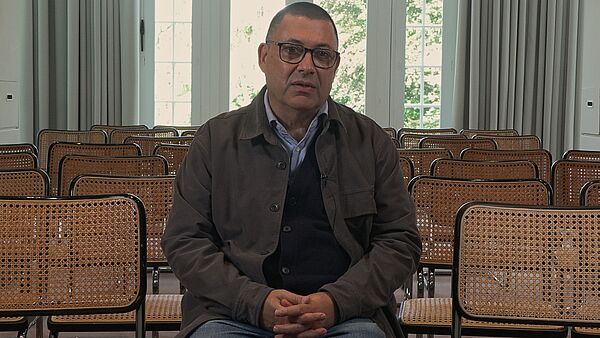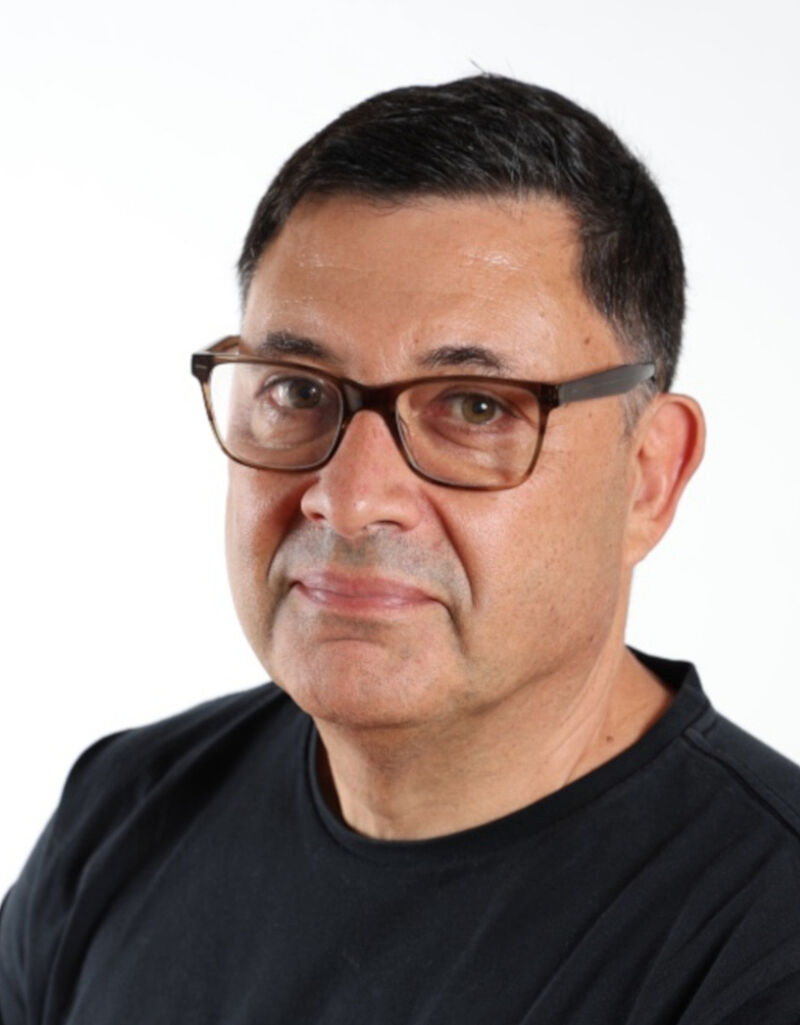
Mark Fleishman, PhD
Professor of Theatre and Performance
Universität Kapstadt
Born in 1963 in Johannesburg, South Africa
BA and Performer’s Diploma in Drama, MA in Drama, and PhD in Drama, University of Cape Town
Arbeitsvorhaben
Approaches to Tragedy in (Post)Apartheid South Africa: Ruins, Caves, and the Aftermaths of Colonialism
I will be completing a monograph project examining how tragedy functions as a critical form in South Africa under conditions of colonial aftermath, political transition, and stalled democratization. The research investigates how theatrical practices respond to historical trauma, unresolved violence, and deferred liberation by reconfiguring tragic forms beyond Eurocentric genealogies. The research claims that tragedy in postcolonial contexts is shaped less by catharsis or resolution than by temporal suspension, precarity, and the persistent “not yet” of decolonization.The monograph engages two dominant but interrelated approaches to tragedy: a political mode, characterized by engagements with the classical archive of Greek tragedy, and a metaphysical mode, grounded in African ritual, cosmology, and indigenous performance traditions. These approaches are analysed through two conceptual metaphors: the “Ruin,” which figures the fragmented remains of colonial cultural forms that are both constraining and generative; and the “Cave,” which signifies ritual spaces of entrapment, transition, and metaphysical negotiation between past, present, and future.
I engage in close readings of three theatrical works created through the Reimagining Tragedy from Africa and the Global South (ReTAGS) project: two of my own works, Antigone (not quite/quiet) and Oedipus at Colonus—#aftersophocles, and Mandla Mbothwe’s iKrele le Chiza. I then seek out the genealogies of these works in works by Athol Fugard, Yael Farber, H. I. E. Dhlomo, and Fatima Dike. Drawing on thinkers such as Mbembe, Boulbina, and Quayson, I reconceptualize tragedy as a structure of feeling shaped by ongoing colonial aftermaths rather than as a fixed genre or closed historical form. Ultimately, tragedy in (post)apartheid South Africa is reframed as a critical site for negotiating unfinished pasts and uncertain futures.
Alongside the work on the monograph, I will begin developing a new performance work together with my partner, Jennie Reznek, and collaborators in Berlin, Vienna, and Johannesburg.
Recommended Reading
Fleishman, Mark. “The Difference of Performance as Research.” Theatre Research International 37, no. 1 (2012): 28–37. https://doi.org/10.1017/s0307883311000745.
–. “Making Space for Ideas: The Knowledge Work of Magnet Theatre.” In Magnet Theatre: Three Decades of Making Space, edited by Megan Lewis and Anton Krueger. Intellect; University of South Africa Press, 2016.
–. “Tragedy, Apartheid, (De)Coloniality.” In Tragedy as a Travelling Form: Itineraries from Thespis to Today, edited by Philipp Lammers, Juliane Vogel, and Christina Wald. Methuen Drama, 2025. https://doi.org/10.5040/9781350466395.0021.
Publikationen aus der Fellowbibliothek
Fleishman, Mark (London, 2025)
Tragedy, apartheid, (de)coloniality
Fleishman, Mark (Cape Town, 2024)
Making / doing / thinking : methods for performance research
Fleishman, Mark (Cape Town, South Africa, 2019)
I turned away and she was gone : a play
Fleishman, Mark (Bristol, UK, 2016)
Magnet theatre : three decades of making space
Fleishman, Mark (Houndmills, Basingstoke, Hampshire, 2015)
Performing migrancy and mobility in Africa : cape of flows Studies in international performance
Fleishman, Mark (Mowbray, South Africa, 2012)
The Magnet Theatre 'migration' plays Collected series ; no. 4