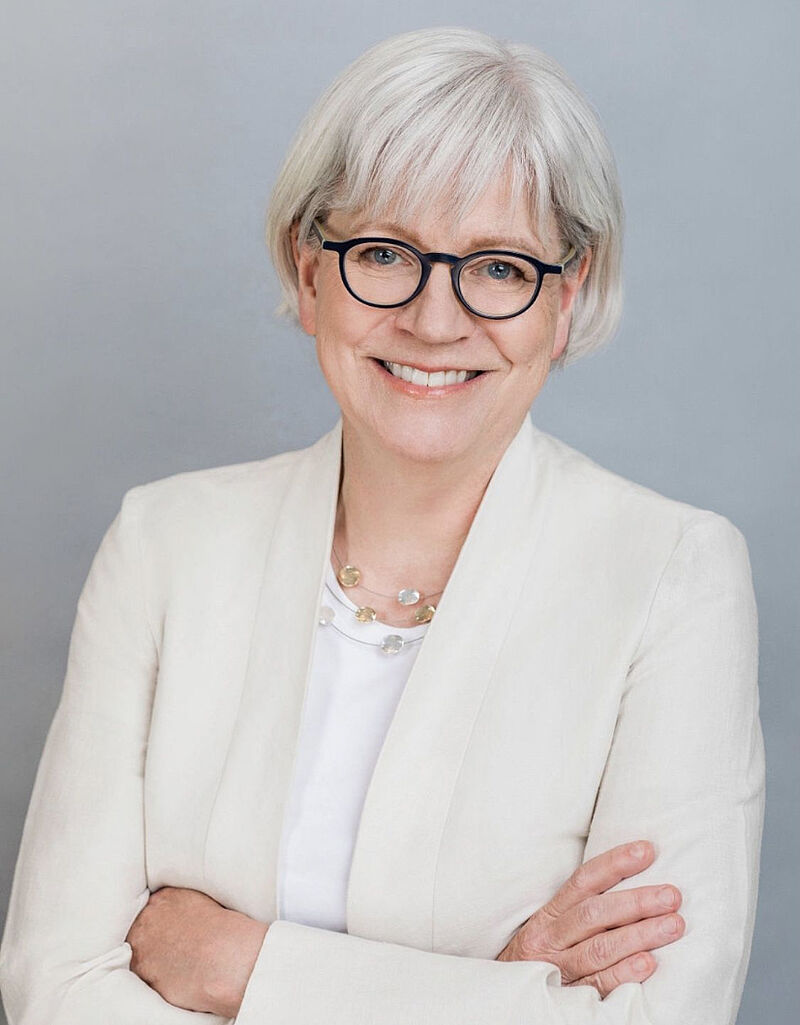
Jutta Brunnée, Dr. jur.
Newton Rowell Chair in Public International Law
Universität Toronto
Born in 1961 in Wiesbaden, Germany
Master of Law, Dalhousie University, Dr. jur., Johannes Gutenberg University Mainz
Arbeitsvorhaben
International Law in Precarious Times
Like all law, international law is a type of social practice, rooted in shared norms that are shaped and maintained by distinctive practices of legality. What then happens to international law when its constituent understandings and practices fray? And what can be done to check such dynamics?These questions are of more than theoretical interest. In fact, at the current juncture, the concern is not merely that important rules are being weakened or destroyed, but that the international legal order as such might be at stake. A growing number of governmental and other actors appear intent on undermining the rule of law, domestically and internationally. And, with the apparent rejection of the very idea of globally binding rules by the state that has been, for better or for worse, the lead supporter and shaper of the post-war order, many other states appear uncertain how to respond.
It is imperative, then, that we consider how best to maintain the core planks of international law, while also seeking opportunities to improve and strengthen it, notably by taking seriously the aspiration for a genuinely universal legal order. After all, what some observers in the Global North perceive as a “rupture” in the global order may well be seen in other parts of the world as particularly stark manifestations of a long-standing experience of double standards and powerful states’ self-exemption from inconvenient rules.
My project is to explore what states and non-state actors can do to counteract the weakening of the understandings and practices that sustain international legality. What options are there for the reinforcement, clarification, or even further development of international rules when previously influential states are unwilling or unable to drive norm development? Can smaller states, international courts and expert bodies step into the breach? I plan to pursue these questions in the context of the rules on inter-state use of force and on the protection of the global environment, including the climate system.
Recommended Reading
Brunnée, Jutta, and Stephen J. Toope. Legitimacy and Legality in International Law: An Interactional Account. Cambridge University Press, 2010.
Brunnée, Jutta. “Völkerrechtskritik: Gestern und Heute.” In Rückblick nach 100 Jahren und Ausblick – Migrationsbewegungen, Berichte der Deutschen Gesellschaft für Völkerrecht, no. 49, edited by Nina Dethloff, Georg Nolte, and August Reinisch. C.F. Müller, 2018.
–. Procedure and Substance in International Environmental Law. The Pocket Books of The Hague Academy of International Law 40. Brill, 2020.
Kolloquium, 06.10.2026
International Law in Precarious Times
In his instantly famous speech at the World Economic Forum in Davos this past January, Canadian Prime Minister Mark Carney made the case that we were in the midst of “a rupture in the world order, the end of a pleasant fiction, and the beginning of a harsh reality where geopolitics – where the large, main power – is submitted to no limits, no constraints.”
If this diagnosis is correct, what does it mean for international law, international lawyers, and international law scholars? I hope to begin mapping out answers to this question by bringing together two different strands of my work.
The first strand is a framework, developed over some two decades, that understands international law as a type of social practice, rooted in shared norms that are shaped and maintained by distinctive practices of legality (‘interactional law’). The second strand is work in international environmental law, revolving around the application of the field’s core norm, the harm prevention obligation, to the global environment, including the climate system.
I argue that the interactional law framework helps examine the “rupture” by illuminating what happens to international law when its constituent understandings and practices fray. It also offers some insights into what can be done to address such dynamics. While only a small part of the larger legal landscape, the recent developments revolving around the harm prevention rule offer some illustrations, showing also that a variety of actors can help sustain international legality.