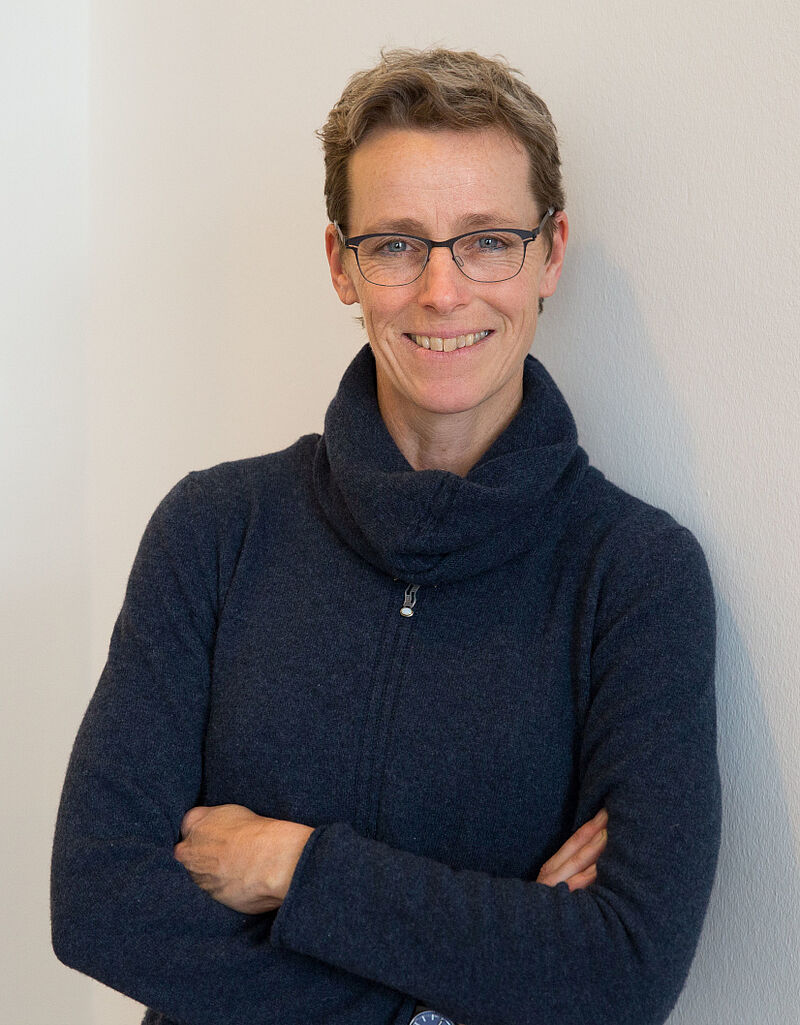
Kate Brown, Ph.D.
Thomas Siebel Distinguished Professor in the History of Science
Massachusetts Institute of Technology, Cambridge
Born in 1965 in Naperville, Ill., USA
B.A. in Russian Literature, University of Wisconsin–Madison, Ph.D. in History, University of Washington
Arbeitsvorhaben
The Future of Food Is Urban
This project focuses on urban metabolisms in the past in order to reshape the vision of modern food economies from one of scarcity to one of bounty.Urban agriculture has thrived for millennia, but often overlooked is the surge of self-provisioning with the emergence of the first large industrial cities in the mid-19th century. In 1900, for example, 2,000 urban farmers grew fresh produce on tiny lots for two million Parisians. During crises such as the two world wars, gardeners in cities across Europe and the United States transformed open space into productive gardens that produced from 40% (US) to 100% (USSR) of the food people ate. So-called “Victory Gardens” emerged so quickly because urban self-provisioners laid the groundwork.
Waste constituted the essence of urban food production. Cities serve up a wealth of organic nutrients in the form of food scraps, industrial discards, and human and animal waste. Urban farmers used these nutrients to build human-engineered soils. They took advantage of heat islands, sunbaked walls, and wind-blocking buildings to extend the growing season and range of crops. Global food supply chains, in contrast, consume ghost acres, while requiring a great deal of fuel, and releasing carbon and chemical toxins. Growing food in cities has the advantage of shortening supply chains and reducing food waste and reliance on fossil fuels and chemical additives. A city of garden beds and edible boulevards also sequesters more carbon, holds water, has greater biodiversity, and supports human health.
When people come together over urban gardens, they also cultivate social institutions, such as communal child care, funds for microloans and unemployment, health care, and educational programs. This project will explore how urban food economies drawing on the bounty flowing from organic nutrient waste also serves up green democracies.
Recommended Reading
Brown, Kate. Plutopia: Nuclear Families, Atomic Cities, and the Great Soviet and American Plutonium Disasters. Oxford University Press, 2013. French: Plutopia: Une histoire des premières villes atomiques. Translated by Cédric Weis. Actes Sud, 2024.
–. Manual for Survival: A Chernobyl Guide to the Future. W. W. Norton; Allen Lane, 2019. French: Tchernobyl par la preuve: Vivre avec le désastre et après. Translated by Cédric Weis and Marie-Anne Béru. Actes Sud, 2021.
–. Tiny Gardens Everywhere: The Past, Present, and Future of the Self-Provisioning City. W. W. Norton, 2026.
Publikationen aus der Fellowbibliothek
Brown, Kate (New York, 2026)
Tiny gardens everywhere : the past, present, and future of the self-provisioning city
Brown, Kate ([London], 2020)
Manual for survival : a Chernobyl guide to the future
Brown, Kate (Oxford, 2015)
Plutopia : nuclear families, atomic cities, and the great Soviet and American plutonium disasters