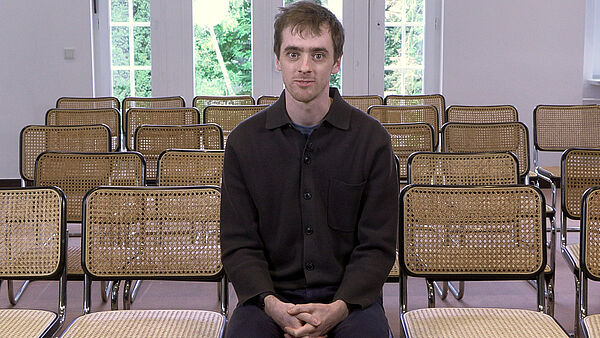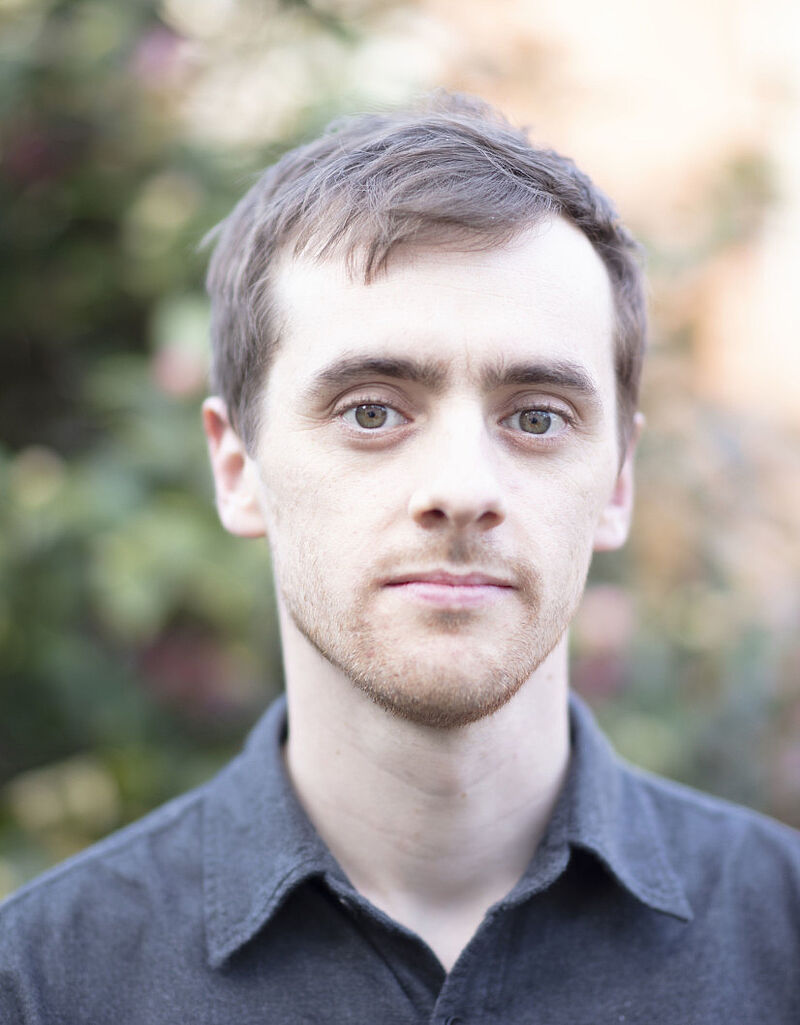
Liam Shaw, PhD
Computational Biology
Universität Bristol
from September 2025 to February 2026
Born in 1991 in Shrewsbury, United Kingdom
MPhys, University of Oxford, MRes in Modelling Biological Complexity and PhD in Computational Biology, University College London
Fellowship
College for Life Sciences
Arbeitsvorhaben
The Evolutionary Roles of Extrachromosomal DNA
All organisms store DNA in chromosomes, but DNA can also exist outside them. This extrachromosomal DNA (ecDNA) can facilitate evolution—from antimicrobial resistance in bacteria to tumour progression in human cancer—but its diverse roles have not been considered together. During my fellowship at the Wissenschaftskolleg zu Berlin, I will explore how evolutionary theory can bring this diversity within a common framework.The focus of my usual research is bacterial plasmids: self-copying genetic elements in bacteria that can replicate independently. Plasmids are key vectors for important functions, including antimicrobial resistance, and are the best-studied example of ecDNA, even though we do not understand many features of their spread and evolution. Recently, the use of whole-genome sequencing to study human cancers has revealed that many tumour cells also contain ecDNA. In cancer, ecDNAs are associated with oncogenes and drug resistance. The uncontrolled growth of cancer cells in a multicellular organism has been described as an atavistic return to a more “single-celled” existence. Though ecDNA in cancer has many differences from plasmids, the similarities are further evidence in support of this concept and suggest that drawing on evolutionary theory for plasmids could be beneficial in this very different area.
Beyond humans, ecDNA has also been studied in model systems such as yeast, where it can confer environmental adaptations, and in plants, where it can confer herbicide resistance. These striking findings across different fields confirm that ecDNA plays important roles across biology, often linked to scenarios of rapid adaptation. However, at the moment, this research is scattered in different disciplines, often with different terminology and frameworks. By performing a synthesis of our current knowledge of the forms and functions of ecDNA, I hope to identify commonalities in research questions and approaches that could point the way for future areas of study and clinical applications.
Recommended Reading
Shaw, Liam P., Alethea D. Wang, David Dylus, et al. (2020). “The Phylogenetic Range of Bacterial and Viral Pathogens of Vertebrates.” Molecular Ecology 29 (17): 3361–3379. https://doi.org/10.1111/mec.15463.
Shaw, Liam P., Kevin K. Chau, James Kavanagh, et al. (2021). “Niche and Local Geography Shape the Pangenome of Wastewater- and Livestock-Associated Enterobacteriaceae.” Science Advances 7 (15): eabe3868. https://doi.org/10.1126/sciadv.abe3868.
Shaw, Liam P., Eduardo P. C. Rocha, and R. Craig MacLean (2023). “Restriction-Modification Systems Have Shaped the Evolution and Distribution of Plasmids across Bacteria.” Nucleic Acids Research 51 (13): 6806–6818. https://doi.org/10.1093/nar/gkad452.
Kolloquium, 12.11.2025
Strange Loops: extrachromosomal DNA across biology
All living cells contain large molecules of DNA called chromosomes, but DNA can also exist in extrachromosomal forms. Decades of research across different organisms has uncovered more of these “strange loops” than expected – if we look carefully enough, we tend to find them. This empirical fact poses explanatory challenges. In my field, one example is the so-called plasmid paradox: plasmids are a common form of extrachromosomal DNA in bacteria, but simple evolutionary models predict that they shouldn’t exist. In this talk, I’ll present provisional work thinking about the evolutionary roles of extrachromosomal DNA, drawing on my own research as well as recent research on cancer. My premise is that cancer provides an independent case study of unicellular life, which we can use as a fruitful testing ground for debates in bacterial evolution. I’ll use this approach to outline what I think is a novel argument against the plasmid paradox. I’ll end with some reflections on the technological and intellectual biases in our understanding of variation in biology, and the implications for our accounts of evolution.
Publikationen aus der Fellowbibliothek
Shaw, Liam (Oxford, 2023)
Shaw, Liam (Washington, DC [u.a.], 2021)
Shaw, Liam (Oxford [u.a.], 2019)
The phylogenetic range of bacterial and viral pathogens of vertebrates