PDF herunterladen
The present project aims to address this gap in the historical anthropology of social mobilization in Belarus and, at the same time, widen the spaces of academic freedom by pursuing scholarly endeavors in a field that remains a complete taboo within Belarus.
Recommended Reading
Makhouskaya, Iryna, and Iryna Romanova. Mir: historyya myastechka, shto raskazali yago zhykhary [Mir: The history of the town as told by its inhabitants]. European Humanities University, 2009.
—. “‘Where Has Everything Gone?’ Remembering Perestroika in Belarusian Provinces.” In Reclaiming the Personal: Oral History in Post-Socialist Europe, edited by Natalia Khanenko-Friesen and Gelinada Grinchenko, 256–287. University of Toronto Press, 2015.
Makhouyskaya, Iryna. “Kanets savetskay epokhi i nezalezhnasts’ Belarusi u pamyatsi zhyharou belaruskay pravintsyi” [The end of the Soviet era and the independence of Belarus in the memory of residents of the Belarusian province]. In Drogi do niepodległości Polski i Białorusi: Szkice z historii i kultury Białorusi i Polski [Roads to the independence of Poland and Belarus: Sketches from the history and culture of Belarus and Poland], edited by Michał Jarnecki, 95–115. Wydawnictwo Naukowe UAM, 2021.
© privat
2025/2026
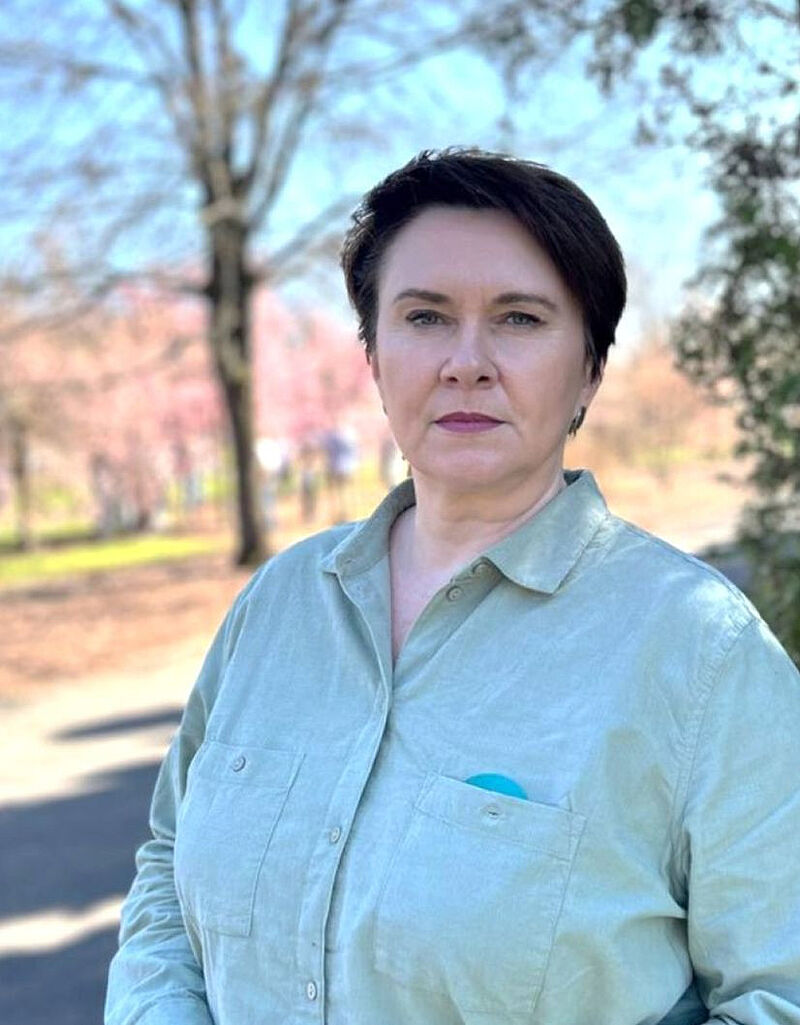
Iryna Makhouskaya, Dr.
History
Warschau
from September 2025 to February 2026
Born in 1973 in Minsk
Dr. in History, Belarusian State University
Fellowship
Yehudit und Yehuda Elkana-Fellow
Arbeitsvorhaben
Solidarity and the Horizontal Networks of the Post-1991 Transformation Period and in the Aftermath of the 2020 Revolt: A Research Network and Ethnographic Archive of Protest
The mass protest movement against the falsification of the 2020 presidential elections in Belarus demonstrated the immense driving force of solidarity and horizontal networks within civil society. New social media, particularly Telegram, played a significant role in this movement by enabling the creation of protest communities. The presence of this fundamentally new social platform, which renders territorial proximity no longer a prerequisite for uniting like-minded individuals, distinguishes the solidarity-building processes of 2020. However, the social mobilization of the late socialist period and the transformation phase, which began with Perestroika and the dissolution of the USSR, constituted a historical precedent for these processes; this remains largely understudied but can deliver important insights into the cycle of mobilization-repression-atomization of society in post-Soviet society. In this respect, Belarus, as one of the most exceptional and interesting cases of non-transition to democracy after 1991, is an ideal case study to investigate not only on the factors ensuring the success of protest movements, but also the variables that decide on their failure.The present project aims to address this gap in the historical anthropology of social mobilization in Belarus and, at the same time, widen the spaces of academic freedom by pursuing scholarly endeavors in a field that remains a complete taboo within Belarus.
Recommended Reading
Makhouskaya, Iryna, and Iryna Romanova. Mir: historyya myastechka, shto raskazali yago zhykhary [Mir: The history of the town as told by its inhabitants]. European Humanities University, 2009.
—. “‘Where Has Everything Gone?’ Remembering Perestroika in Belarusian Provinces.” In Reclaiming the Personal: Oral History in Post-Socialist Europe, edited by Natalia Khanenko-Friesen and Gelinada Grinchenko, 256–287. University of Toronto Press, 2015.
Makhouyskaya, Iryna. “Kanets savetskay epokhi i nezalezhnasts’ Belarusi u pamyatsi zhyharou belaruskay pravintsyi” [The end of the Soviet era and the independence of Belarus in the memory of residents of the Belarusian province]. In Drogi do niepodległości Polski i Białorusi: Szkice z historii i kultury Białorusi i Polski [Roads to the independence of Poland and Belarus: Sketches from the history and culture of Belarus and Poland], edited by Michał Jarnecki, 95–115. Wydawnictwo Naukowe UAM, 2021.