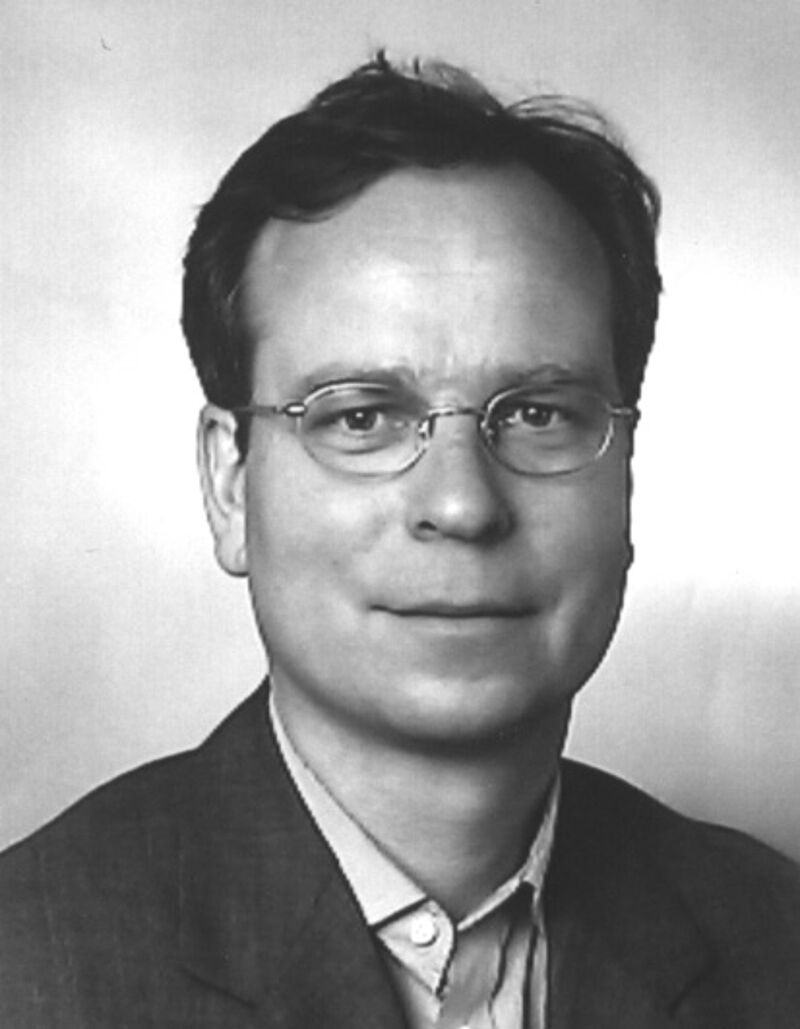
Axel Meyer, Ph.D.
Professor für Zoologie und Evolutionsbiologie
Universität Konstanz
Born in 1960 in Mölln, Germany
Studied Zoology and Biochemistry at the University of California, Berkeley, Organismal and Evolutionary Biology at Harvard University, and Biology at the University of Miami, and at the Universities of Kiel and Marburg
Schwerpunkt
Sympatrische Artbildung: theoretische Modelle und empirische Daten
Arbeitsvorhaben
Artbildung und Diversifikation in der adaptiven Radiation von Buntbarschen
Charles Darwin recognized that new species can originate in several different kinds of geographic settings, including "allopatry" (from the Greek allos meaning "other" and patra meaning "fatherland"), where novel species arise resulting from geographical isolation and lack of homogenizing gene flow, as well as through "sympatric speciation" (from the Greek sym for "the same"), whereby populations diverge into separate species even in the absence of geographical isolation. However, the feasibility and frequency of the latter mechanism has been hotly debated ever since Darwin. Although theoretical as well as empirical evidence has been put forth regularly since the 1930s, biological assumptions of models and the level of support of empirical evidence in studies reporting on sympatric speciation are still often doubted, and, even today, few cases are widely accepted as bona fide evidence for sympatric speciation. While examples of sympatric speciation are published quite regularly, although rather infrequently, and rules for testing allopatric speciation are well-accepted, those for sympatric speciation remain controversial.It is necessary to better understand the limitations of empirical work in determining crucial parameters of theoretical models such as the strength of selection in disruptive selection that is deemed necessary for sympatric speciation to occur. There is an obvious need for communication between theoretical and empirical evolutionary biologists interested in speciation.
Recommended Reading
Meyer, A., T. D. Kocher, P. Basasibwaki, and A. C. Wilson. 1990. "Monophyletic origin of Lake Victoria cichlid fishes suggested by mitochondrial DNA sequences." Nature 347: 550-553.
Verheyen, E., W. Salzburger, J. Snocks, and A. Meyer. 2003. "The origin of the superflock of cichlid fishes from Lake Victoria, East Africa." Science 300: 325-329.
Barluenga, M., K. Stölting, W. Salzburger, M. Muschick, and A. Meyer. 2006. "Sympatric speciation in Nicaraguan crater lake cichlid fish." Nature 439: 719-724.
Publikationen aus der Fellowbibliothek
Meyer, Axel (München, 2015)
Adams Apfel und Evas Erbe : wie die Gene unser Leben bestimmen und warum Frauen anders sind als Männer Adams Apfel und Evas Erbe
Meyer, Axel (Hamburg, 2011)
Evolution : die Entstehung des Lebens ; ein exklusives Zeit-Seminar Zeit-Akademie
Meyer, Axel (Hoboken, N.J., 2010)
Whole genome duplications and the radiation of vertebrates
Meyer, Axel (Bethesda, Md., 2009)
Meyer, Axel (London, 2009)
The evolutionary significance of ancient genome duplications
Meyer, Axel (2009)
Brain-Drain und Brain-Gain : wie Deutschland seine Chancen als Land der Wissenschaft verpasst
Meyer, Axel (Oxford, 2009)
Space, sympatry and speciation
Meyer, Axel (Mainz, 2009)
Meyer, Axel (Düsseldorf, 2008)
Wir sind alle Mutanten! : die Evolution dauert an ; Alexander Weil im Gespräch mit Axel Meier News & Stories
Meyer, Axel (Berlin, 2008)

Im Kolleg entstanden 24.08.15