Issue 21 / June 2026
Catastrophic Constructivism
by Gisela Nauck
On Dmitri Kourliandski’s compositional aesthetics of innovative negation
The musicians of a large orchestra are onstage playing a single note – D; at intervals, electro-acoustic impulses crosscut the multi-colored harmony. On 15 October at the 2013 Ruhrtriennale in the Jahrhunderthalle Bochum, Dmitri Kourliandski’s Riot of Spring is on the program, described by the composer as a techno-ballet. Igor Stravinsky’s famous piece was of course Le Sacre du Printemps or The Rite of Spring. One by one, the musicians carry this single note of D from the stage to the audience. They give their instruments to individual listeners, show them how the note should be played and hand over the music-making to them – on the double bass, the trumpet, the violin or the flute. After twenty minutes the stage is empty, the composer having transferred the performance of his musical piece to the public. The note D is spread out vividly through the unpracticed blowing and bowing. A hierarchical boundary has fallen, that between the composition and the audience, between music-making and music-listening – and the audience applauds with enthusiasm.
From the very beginning, Dmitri Kourliandski’s compositional work can be characterized by the dissolution of existing norms and borders that have become ingrained in the art form of music over the course of its cultural development, from composition to reception. He is primarily concerned with the negation of control and hierarchy. It is no accident that the radical nature of his aesthetic has a Russian context. Yet his de-hierarchized music demonstrates the creative vision and musical innovations that can result therefrom. Soloists, ensembles, orchestras and singers continue to participate in this process; increasingly, graphic and conceptual text-scores are also emerging. In 2013 Riot of Spring marked an important milestone in this development – a collapse of not only the hierarchy between interpretation and listening but a dissolution of the professional filter between author, material and (musical) text.
Dmitri Kourliandski was born in 1976 and lived in Moscow until 2022. Since the early 2000s he has been involved in contemporary Russian music through his compositions and cultural activities. One of his first significant works was Innermost Man for voice and chamber ensemble, based on texts by Andrei Platonov, and composed in 2002 when he was 26 years old. It was here that he explored the limits of sound production through the physical and technical demands placed on musicians’ abilities. At the time, these musicians were the Moscow Contemporary Music Ensemble and, again and again, the voice of Natalia Pschenitschnikova. It was with this composition that Dmitri Kourliandski won the international Gaudeamus Award in Amsterdam in 2003, which helped to launch an internationally successful career which continues strong to this day. In Innermost Man the composer entrusted the emerging sounds and music to the interpreters and – because of the excessive demands – to happenstance.
This relinquishment of compositional control led to what Kourliandski termed “objective music” in 2004; it also gave rapid rise to a search for suitable strategies in dealing with time – an element particularly significant in music – and in breaking free from the “cage of time”, as he terms it, that is music. His works of the late 2000s to the early 2010s evolved into acoustic-kinetic sculptures, open to the performers’ active participation and to listeners adopting their own perspectives within them. The performers – who could hardly still be described as interpreters of a given musical score – remained professional ensembles, conductors and soloists. But as a composer, Kourliandski is now increasingly inventing the practical framework for performance in order that sounds can emerge and become music. Examples of this include Contra-relief for ensemble composed in 2005 and Engramma for voice and ensemble from 2008.
Up until Riot of Spring in 2013, Kourliandski’s compositional aesthetic was characterized by five key ideas. 1) Music is a kinetic sculpture made of modeled time. 2) The material is composed of unpredictable and uncontrollable sounds. 3) Art permits the creation of an autonomous world that follows no hierarchical laws. 4) Content emerges through perception. 5) Listeners, as observers, become participants.
Various artistic, philosophical and scientific theories were influential in shaping such a conception of music. Representative of this conception are figures such as John Cage, Cornelius Cardew, Joseph Beuys and Jean Tinguely. Movements within modernist music, such as American minimalism and Russian constructivism, played equally significant roles. Kourliandski was also inspired by the philosophical theories of radical constructivism as advanced by the philosophers and communication scientists Ernst von Glasersfeld and Paul Watzlawick, as well as by the concept of autopoiesis as developed by the Chilean biologists and neuroscientists Humberto R. Maturana and Francisco J. Varela. Kourliandski's aesthetics have been repeatedly characterized in the press as well as musicological articles as "catastrophic constructivism".
Against this backdrop another work, Commedia delle arti, appears to be both a synthesis and culmination of his aesthetic of the innovative negation of control and hierarchy. Commedia delle arti was created for the Russian Pavilion at the Venice Biennale where it premiered in 2017. This time it was a reference to Luigi Nono as a quasi-positive reversal of his tragedy of listening: Prometeo. Tragedia dell’ ascolto. The audience now becomes the sole performer and every art form is allowed. There is no musical score – nothing that can be interpreted. It is solely about invention. But singing, playing an instrument, dancing, writing, reading or touching should only be imagined by visitors to the Russian Pavilion. For instance the program leaflet states (in Russian and English): “commedia della danza (comedy of dancing): dance in your mind / actually dance no more than one short gesture per minute / don’t lose the continuity of the imaginary dance / once a longer complete gesture can be performed.” The same applies to the execution of every sound, every gesture, every word, every brushstroke, etc. The occasion for these imaginings was music pre-produced by Moscow musicians and broadcast as a sound installation from the Russian Pavilion. Artistic creation had been replaced by imagination and perception. A year earlier in 2016, Dmitri Kourliandski had founded the Institute of Perception in Moscow, which met with an enthusiastic response due to its “laboratory” offerings.
In a conversation in late February this year, he referenced an important facet of his aesthetics of negation: “In my understanding it’s not about negation but an invitation – including people who were not previously part of the whole. Intrinsic to art is that it creates boundaries everywhere: texts are contained within book covers, in music there are limits to understanding, theater takes place in a closed space, the stage constitutes a boundary, and so on. This phenomenon has existed for centuries and I myself worked within such boundaries for a long time; but at a certain point – around the year 2013, give or take – I felt shackled and wanted to break through these boundaries.”
This overcoming of boundaries had a socio-political context, which Kourliandski addressed in connection with the performance of Riot of Spring during the 2013 Ruhrtriennale: “It is obvious that the words ‘riot’ and ‘spring’ are laden with connotations regarding the actual situation in Russia. I am far removed from politics, but the situation in which we live affects us directly or indirectly, prompting us to act or reflect.” Even back then, pressure on the arts and artistic creation had enormously increased due to censorship, marginalization, bans and propaganda. When Putin attacked Ukraine in February 2022, Dmitri Kourliandski immigrated with his family to Paris where Éditions Jobert had long been publishing his compositions. In Russia his music has become politically charged and is hardly performed anymore. Resistance and insurrection have been inscribed in it anew – not in the material itself but in its very existence.
This immigration must have been doubly difficult for Kourliandski. Since the early 2000 he had been part of an exceptionally active group of young composers who had engaged culturally to help restore freedom to Russia’s young contemporary music scene in a time of political upheaval. In 2005 he was co-founder of the composers group SoMa – Soprotivlenije Materiala – meaning: “Resistance of the Material.” SoMa promoted self-determined, international exchange and proclaimed material to be a form of resistance against existing values and stereotypes, especially in the fight against philharmonic conservatism. “We are contemporary music” – this was the opening sentence of the SoMa manifesto, published in 2006 in Tribuna sowremennoi musyki, a magazine that Kourliandski founded in 2005 with private funding and which he helmed until 2009. As concert organizers, the group opened up the ghettos of small contemporary music festivals to a broader public in Moscow, St. Petersburg, Nizhny Novgorod and elsewhere – and these events are still characterized today by a large young audience. In 2011, together with the Moscow Contemporary Music Ensemble and its manager Viktoria Korshunova, Kourliandski founded the International Academy of Contemporary Music in Tchaikovsky (a town named for the composer) where he headed the summer courses, and in 2015 he became the musical director of the Stanislavsky Electrotheatre in Moscow.
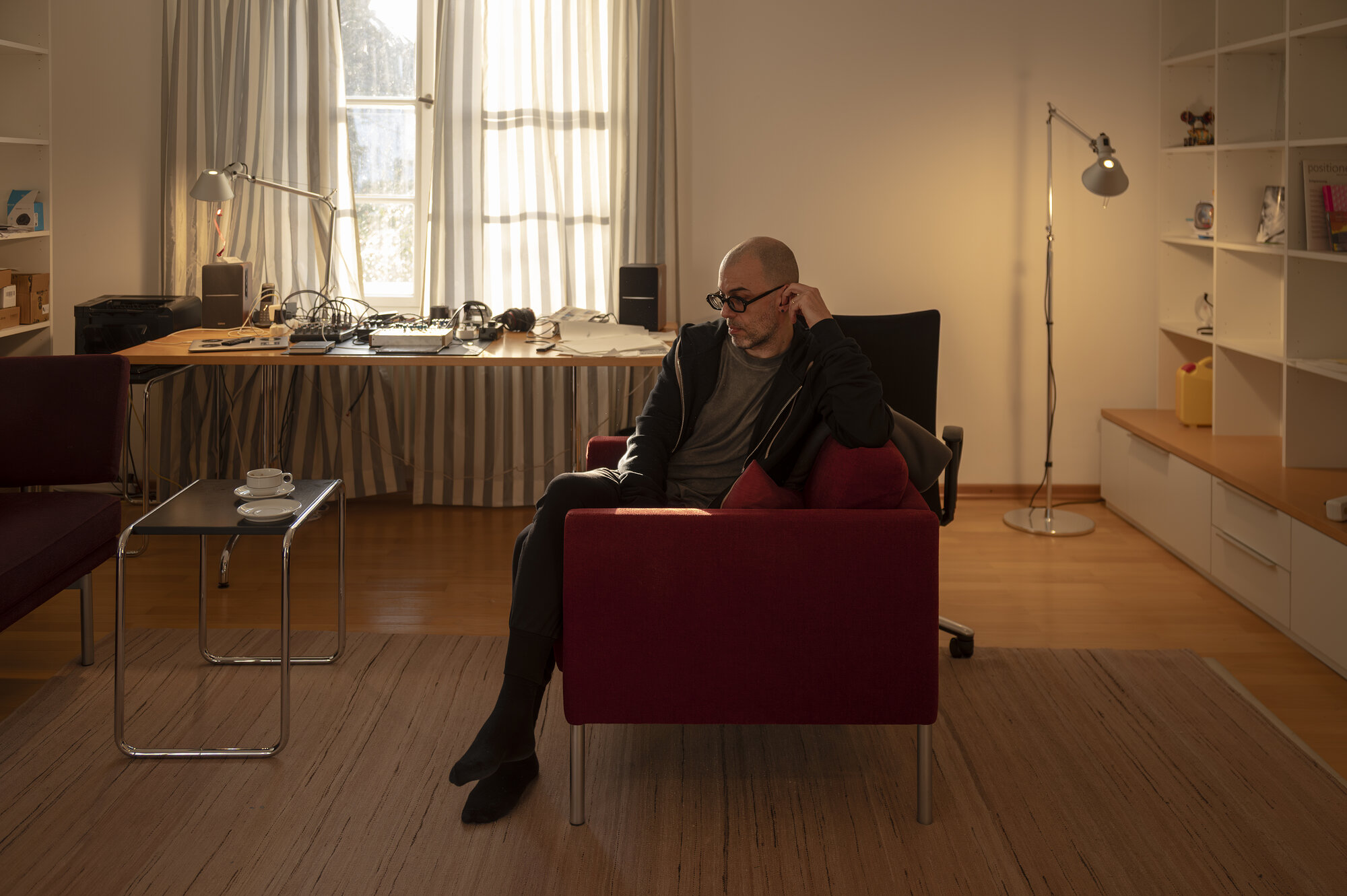
By challenging boundaries and confounding expectations still associated with music today, Dmitri Kourlandski has carved out a new creative space for himself. Fundamental questions about music have become the material for exploration on a new aesthetic level: What is art? What is music? What is a concert? What is a score? What is the concert’s context? Who are the musicians? These are questions that also shape Kourlandski’s compositional work here at the Wissenschaftskolleg, namely the string quartet Partially Restored Landscapes, a series of installations titled Rituels vides and a radio piece for Radio France called Five Unsent Messages.
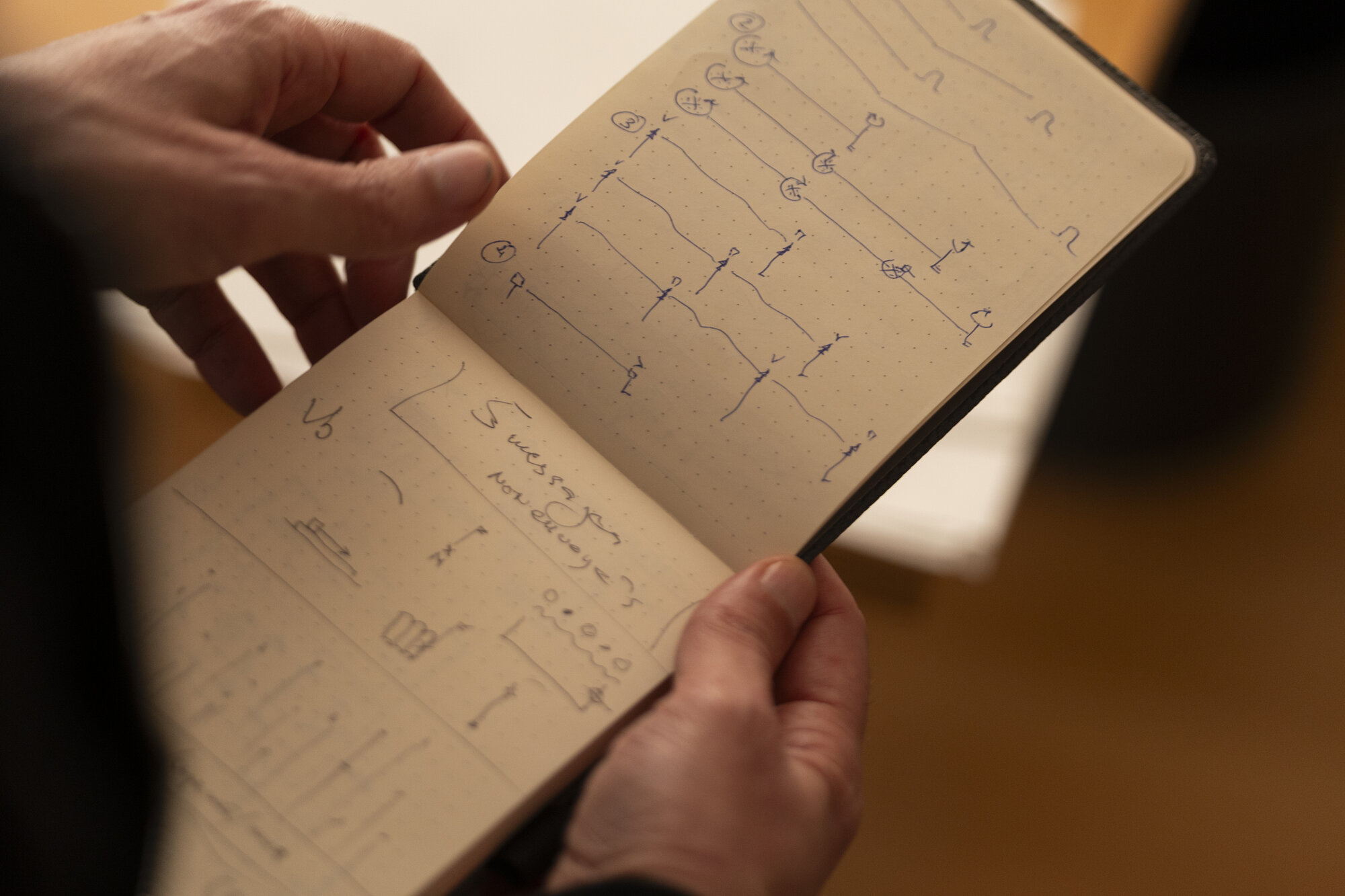
Especially interesting might be how he will address that most classical of genres: the string quartet. After having its world premiere on 26 April 2026 at the Wittener Tage für neue Kammermusik, it will be performed on 27 May at the Wissenschaftskolleg; and the negation – as an invitation – will be tendered the musicians of the world-renowned Quatuor Diotima. Compositional invention now consists of a textual concept accompanied by performance instructions. Kourliandski sees a string quartet no longer as a genre but as four people who play string instruments and with whom he explores certain issues, for instance the musicians’ responsibility to the text. The text is a roster of names – 100 pages of Russian first names written one below the other in Cyrillic script. This Russian writing is an important part of the concept. All names were generated randomly, have no biographical background, and are not meant to be situated within any social context. They are only sometimes furnished with dates of birth and death, similar to the cover plates on urns in a columbarium. They come to life solely through the musical form that the musicians give them; only then do the names acquire a voice of their own. Each musician is given 25 pages, each page must be played in one minute. The string quartet explores the impossibility of naming something – even though concrete points of reference, such as names, do exist.
The radio piece Five Unsent Messages owes its experimental character to a commission from Radio France. It was created for a series that has various composers write a ten-minute composition of five parts and with each part lasting two minutes. The individual parts are broadcast every day of the week, from Monday to Friday, then on Sunday the entire piece is played. Kourliandski chose “censorship” as his topic and composed a piece for seven musicians of the French ensemble Multilatérale. Due to censorship, the sheet music is almost completely blacked out. The musicians once again become the true creators of this censored music by playing – with correspondingly fewer instructions from the composer – what they believe to have been in the blacked-out sections.
Dmitri Kourliandski belongs to a generation of composers who have redirected the course of compositional creativity in the twenty-first century. The radicalization of instrumental sound production, the rejection of hierarchies and control within the musical process, the sharing of the compositional end result onto musicians and the audience, the shift of focus from creativity to the process of perception – all these have opened up new perspectives for contemporary music in an avant-garde sense.
More on: Dmitri Kourliandski
Images: © Maurice Weiss