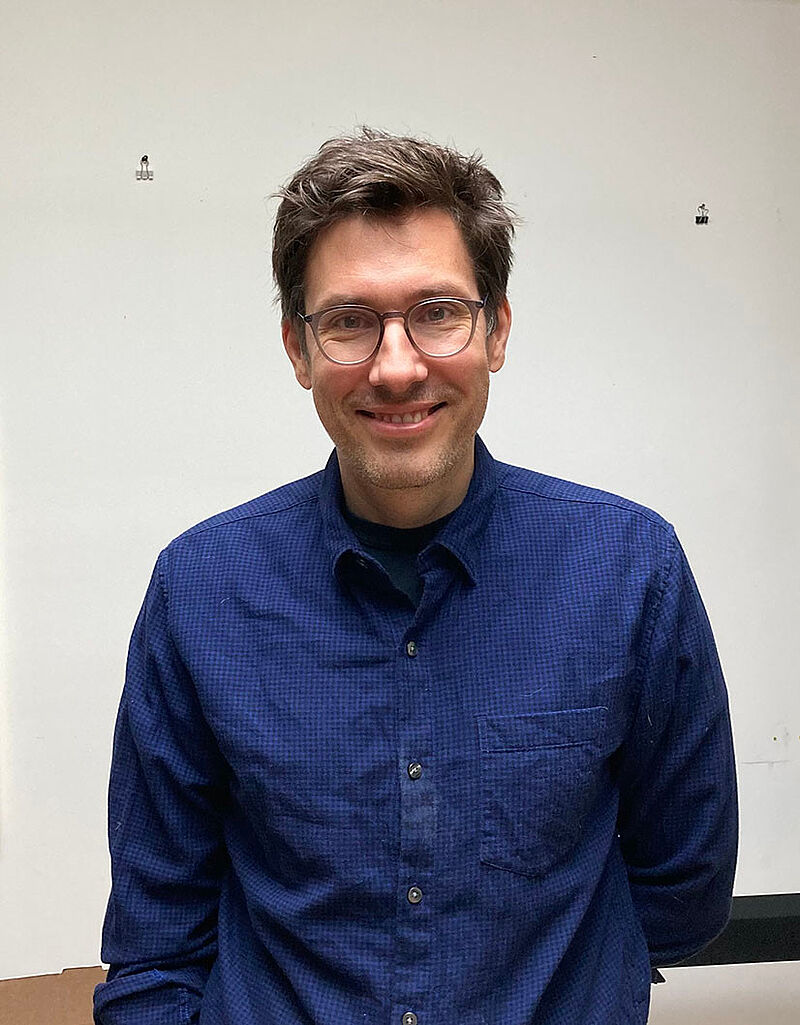
Benjamin Piekut, Ph.D.
Professor of Music
Cornell University
Born in 1975 in Camp Hill, Pa., USA
B.A. in Music, Hampshire College, M.A. in Composition, Mills College, M.Phil. and Ph.D. in Historical Musicology, Columbia University
Project
Sound Art: History in Search of a Concept
In this project, I examine questions of method in the historiography of sound art, arguing that existing scholarship has failed to define its object with clarity. Authors have emphasized sound art’s engagements with architecture, its sculptural qualities, its art-gallery context, or its basis in the material properties of sound, but in every case, they employ this or that framework without reflecting on the more fundamental question: How could sound art have been a choice or a possibility in the first place, even if it was one with many conflicting definitions? To what did it respond? I argue that sound art was a concept (not an art movement, technique, or medium) that emerged historically and socially around 1980. This concept, I will contend, came into shape in response to local pressures placed on the category of “music” across diverse artistic practices of the post-disciplinary avant-garde after 1960, including dance, sculpture, free jazz, and performance. In contrast to a prevailing critical narrative that represents sound art as an insurgent avant-garde counterposed to music, I view the consolidation of the concept to have been more closely related to culturally conservative initiatives of the 1980s, such as Jazz at Lincoln Center. I also examine this history of a modern aesthetic concept in relation to a contemporary artworld that is necessarily global, characterized by discrepant relationships to the histories of modernity and marked by variegated experiences of time. Instead of ignoring the circumstances of the concept’s appearance, as do many new accounts of sound art outside of Europe, I argue that provincializing these conditions permits a much wider, transnational account of the concept’s reformulations and effects.Recommended Reading
Piekut, Benjamin. Experimentalism Otherwise: The New York Avant-Garde and Its Limits. University of California Press, 2011.
—. Henry Cow: The World Is a Problem. Duke University Press, 2019.
—. “The Vernacular Avant-garde: A Speculation / Tamara Levitz and Benjamin Piekut.” By Tamara Levitz. ASAP/Review, September 3, 2020. https://asapjournal.com/the-vernacular-avant-garde-a-speculation-tamara-levitz-and-benjamin-piekut/.
Colloquium, 11.11.2025
Sound Art and the Critique of Music
This presentation introduces some general questions of method in the historiography of sound art, arguing that existing scholarship has failed to define its object with clarity. Authors have emphasized sound art’s engagements with architecture, its sculptural qualities, its intermodal experience, its art-gallery context, or its basis in the material properties of sound, but in every case, they employ this or that framework without reflecting on the more fundamental question: How could sound art have been a choice or a possibility in the first place, even if it was one with many conflicting definitions? To what did it respond? To address such questions, I propose a historical ontology and argue that sound art was a concept (not an art movement, technique, or medium) that emerged historically and socially around 1980.
This concept, I will contend, came into shape in response to local pressures placed on the category of “music” across diverse artistic practices of the postdisciplinary avant-garde. In the case of dance, for example, many artists working in the wake of John Cage and Merce Cunningham introduced a conceptual distinction between sound and music in their work, and this distinction enabled a certain critique of music’s institutions. The generative aesthetics of Cage and the common availability of cheap audio technologies made dance a fitting site for this critique, because these two conditions undermined the institutionalization of musical expertise and opened it up to amateurs from other disciplines. The dancers were particularly eager to accept this invitation because of a widely held desire to assert the autonomy of their artform.
I close the talk by summarizing some of the questions I hope to clarify during my time in Berlin. What kind of grouping is “sound art”? What (if anything) distinguishes such an aesthetic concept from social, political, or scientific concepts? And what is the relationship between concepts and artistic practices?
Publications from the Fellow Library
Piekut, Benjamin (Los Angeles, 2025)
La Monte Young, ed.: An Anthology of Chance Operations (1962-63)
Piekut, Benjamin (Berlin, 2025)
Piekut, Benjamin (New York, NY, 2024)
Sound against music : the musical amateurs of the Judson Dance Generation
Piekut, Benjamin (Durham, 2019)
Henry Cow : the world is a problem
Piekut, Benjamin (New York, 2016)
The Oxford handbook of ... ; Volume 2 The Oxford handbook of critical improvisation studies ; Volume 2
Piekut, Benjamin (New York, 2016)
The Oxford handbook of ... ; Volume 1 The Oxford handbook of critical improvisation studies ; Volume 1
Piekut, Benjamin (New York, 2016)
The Oxford handbook of critical improvisation studies Critical improvisation studies
Piekut, Benjamin (Berkeley, 2011)
Experimentalism otherwise : the New York avant-garde and its limits California studies in 20th century music ; 11