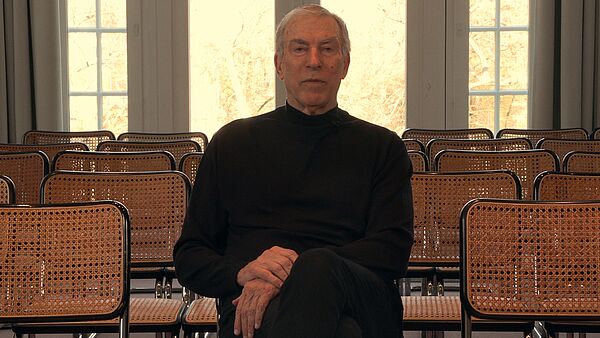
Geoffrey Harpham, Ph.D.
Historian
Durham, N.C., USA
from March to May 2026
Born in 1946 in Chicago, Ill., USA
B.A. in English, Northwestern University, Ph.D. in English, University of California
Project
The Ends of Race: The Rise and Fall of a Concept, 1780–1900
I will be preparing a series of ten lectures that track the arguments made in a forthcoming book called “The Ends of Race: The Rise and Fall of a Concept, 1780–1900.” Focusing on a few key critical exchanges, the book stresses the agonistic or polemical character of the scientific discourse in which the concept of race was debated and defined, and the ends the concept was made to serve. The book will trace the rise of race as a promising area of inquiry with potentially vast implications at the beginning of the nineteenth century to its collapse at the end of the century when the leading scientists concluded that despite a century of scientific inquiry, the concept could not support scientific research and should be abandoned. The connecting link of what I call a “skeletal account” is provided by a common reference to craniology or skull measurement as the most promising source of hard evidence for the existence of something presumed to be a biological fact but that otherwise lacked a physical basis.Recommended Reading
Harpham, Geoffrey Galt. The Ascetic Imperative in Culture and Criticism. University of Chicago Press, 1987.
–. The Humanities and the Dream of America. University of Chicago Press, 2011.
–. Scholarship and Freedom. Harvard University Press, 2020.
Colloquium, 31.03.2026
Race – The Theory
I have been studying the history of the concept of race in Western intellectual discourse from the end of the 18th to the beginning of the 20th centuries. This history has been well documented and thoroughly studied, but it is, I believe, not well understood. Historical, social, political, and moral factors have weighed heavily on scholarship, in many cases distorting evidence and predetermining conclusions. I will be talking about the challenges involved in trying to reconstruct the ways the subject emerged, the process by which it became an object of scientific inquiry, the issues thought to be at stake, and the reasons for the abandonment by serious scientists of the project at the end of the 19th century.