• Institute
    • Leadership
    • Committees
      • Academic Advisory Board
        • Members' List since 1981
      • Board of Trustees
      • Members' Assembly
    • Contact Persons
    • The Kolleg
      • History
        • History of the Institute
          • History of the Kolleg
        • History of the Buildings and Gardens
          • Hauptgebäude
            • Excursus - Villa Linde's Grounds
          • Weiße Villa
          • Neubau
          • Villa Jaffé
          • Villa Walther
        • History of the Signet
      • Funding & Charters
        • Foundation Deed of the Ernst Reuter Foundation for Advanced Study
        • Charter of the Wissenschaftskolleg
      • Donors & Friends
    • Initiatives & Cooperations
      • College for Life Sciences
      • Blankensee-Colloquia
      • Anna Krüger Foundation
      • Some Institutes for Advanced Study (SIAS)
      • Support for Ukraine
      • VUIAS
        • Bilder der Eröffnungsfeier
      • Elkana Fellowships
    • Library
      • Ordering and Borrowing
      • Research
        • Catalogs
        • Specialised Information Services (Fachinformationsdienste)
        • Archives
      • Books & Music on-site
      • Questions?
  • Fellows
    • Fellow Finder
    • Fellows 2025/2026
    • Permanent Fellows
      • Former Permanent Fellows
    • Alumni
      • Fellows' Club
        • Club
          • History
        • Membership
        • Newsletter
          • March 2025
            • Editorial
            • Architecture of Survival: An Interview with Natalia Romik (Elkana Fellow 2024/2025)
            • “Definitions Are Not Ultimate Truths”
            • Further Videos in the Wikotheque
            • The School of Human Rights Association: Building an Egalitarian and Democratic Academia in Turkey
            • Academic Freedom on a Small Scale
            • Save the Date: Annual Meeting of the Fellows’ Club
            • Join the Fellows’ Club
            • Membership Fee and Donations
            • New Publications in the Fellows’ Library
            • Prizes
            • Obituaries
          • February 2024
            • Editorial
            • Feeding the World with Edible Insects
            • Schöner Leben
            • Further Videos in the Wikotheque
            • Conversation with a Left-Handed Hairdresser: The Cutting-Edge Sociology of Barbara Thériault (Fellow 2023/24)
            • Dishes that Raise Questions: Interview with chef de cuisine Sonja Frühsammer
            • Round and round the Grunewald Lake: Five Years of Wicked Wiko Runners
            • Save the Date – Meeting of the Fellows’ Club 2024
            • Join the Fellows’ Club
            • Membership Fee and Donations
            • New Publications in the Fellows’ Library
            • Prizes
            • Obituaries
          • February 2023
            • Editorial
            • History Teacher of the People
            • War and Peace. The Past and Future of Ukraine
            • Cold, Ashamed, Relieved: On Leaving Russia
            • Music of a Refugee
            • A Word from the Chairman
            • Save the dates – Meeting of the Fellows’ Club 2023
            • Join the Fellows’ Club
            • Membership Fee and Donations
            • New Publications in the Fellows’ Library
            • Prizes
            • Obituaries
          • March 2022
            • Editorial
            • Politics, Law, and Science in Times of the Pandemic
            • Pandemics: The Maths, the Masks, the Madness
            • Roni Taharlev: The Harbinger of Corona
            • Rachel Wheatley: Berlin with a Mask
            • A Word from the Chairman
            • Save the dates – Meeting of the Fellows’ Club 2022
            • Join the Fellows’ Club
            • Membership Fee and Donations
            • New Publications in the Fellows’ Library
            • Prizes
            • Obituaries
          • February 2021
            • Editorial
            • Between Eigenzeit and Interdisciplinarity
            • The Masked Kolleg Unmasked
            • Was war und zu welchem Ende studiert man Trumpismus?
            • When Computers Took Their First Steps
            • A Farewell to Sonja Grund
            • Angelika Leuchter
            • Blog Series on Academic Freedom
            • Save the dates – Meetings of the Fellows’ Club 2021 and 2022
            • New Publications in the Fellows’ Library
            • Prizes
            • Join the Fellows’ Club!
            • Obituaries
          • March 2020
            • Editorial
            • Constitution as Nonviolent Revolution
            • Imre Kertész und die europäische Literatur der Gegenwart
            • A Profound Sense of Loss
            • The Wissenschaftskolleg and the East: The New Europe College in Bucharest
            • Save the date - Meeting of the Fellows’ Club - Biodiversity: Conceptual Challenges in an Era of Rapid Change, June 11 and 12, 2020
            • New Publications in the Fellows’ Library
            • Prizes
            • Join the Fellows’ Club
            • Obituarium
          • March 2019
            • Editorial
            • Paintings for the Future
            • Landmark Papers Revisited
            • Working Futures
            • Society Benefits From Our Autonomy
            • Two Million Blossoms in a Jar
            • Save the Date - Meeting of the Fellows' Club: June 13-14, 2019
            • Lectures on Film
            • New Publications in the Fellows' Library
            • Prizes
            • Join the Fellows' Club
            • Obituaries
          • March 2018
            • Editorial
            • A Good Bet: Five Years of the College for Life Sciences
            • Lectures on Film: Lisa Herzog
            • Return to Gdańsk
            • Sign the Gdansk Petition
            • Lecture Series: "Recht und Digitalisierung"
            • The Future of the Humboldt Forum: An Epiphany
            • (Almost) A Lifer
            • Late Checkout
            • Save the Date - Fellowtreffen
            • Prizes
            • New Publications in the Fellows' Library
            • Obi­tu­a­ri­um
          • March 2017
            • Editorial
            • Luca Giuliani: Facets of Stephen
            • Berliner Abend 2017
            • Michael Jennions: Walking Berlin
            • Nostalgia
            • Prizes
          • June 2016
            • Editorial
            • Daniel M. Weary: Three days at Wiko to imagine a new world
            • Katharina Wiedemann: Travelling Lights
            • Wiliam Marx (fr)
            • Luc Steels: Grunewaldkirche, Bach, and Passions
            • Nostalgia
          • June 2015
            • Editorial
            • Adam S. Wilkins: Humanities and Natural Sciences
            • Rob Page: The Decline of the Humanities?
            • Alfons Söllner: From "Exilforschung" to "Emigrationsforschung"? A Journey in Memory.
            • Susan Rose-Ackerman and Bruce Ackerman: Wiko Then and Now: 1991-1992 and 2014-2015
            • Daniel Schönpflug: Ins Grüne
          • December 2014
            • Editorial
            • Sebastian Conrad: Global History
            • Sahotra Sarkar, Chris Margules: Biodiversity group at the Kolleg
            • Reinhart Meyer-Kalkus: On Uwe Pörksen: Camelot im Grunewald. Szenen aus dem intellektuellen Leben der achtziger Jahre
            • Meredith Reiches: "Literary studies and biology: The Shakespeare-Workshops at the Kolleg 2012 and 2013"
            • Simon Teuscher: Workshop: Perspectives on Actors in Social History
            • Gebhard Kirchgässner: Workshop “The Economic Model of Human Behaviour”
            • Gerald Wilkinson: Workshop “Mind the Gap: Closing the Gulf between Genomic and Phenotypic Studies of Sexual Selection”
            • Sonja Grund: News from the Fellows’ Club
          • May 2014
            • Editorial
            • Peter Reill: From the Wissenschaftskolleg zu Berlin to Wiko: Reflections on a Return after Twenty-Seven Years
            • Reinhart Meyer-Kalkus:Why artists are needed at research institutions
            • Martin Loughlin: Constitutions beyond the Nation-State
            • Franco Moretti: Invisible objects
            • Stefanie Rentsch: The Forum Transregionale Studien – its Mission and History
          • November 2013
            • Editorial
            • Jim Hunt: Ten Years in the Rearview Mirror
            • Thorsten Wilhelmy: My First Year at the Wissenschaftskolleg
            • Giovanni Frazzetto: The College for Life Sciences at the Wissenschaftskolleg
            • Reinhart Meyer-Kalkus: The Fellow Forum for Former Fellows
      • Fellow Forum
  • Events
    • Calendar of Events
    • Workshops
    • Series of Events
      • Lecture Recitals
      • Zur Zeit
      • Observatorium
      • Ernst Mayr Lecture
    • Three Cultures Forum
  • Wikotheque
    • Wiko Shorts
    • Lectures & Keynotes
    • Features
    • Köpfe und Ideen
    • Projects
    • Yearbook
    • Zeitschrift für Ideengeschichte
  • Becoming a Fellow
    • Fellowship Applications
      • Preconditions
      • Selection Criteria
      • Selection Procedure
      • FAQ
    • Wiko Early Career Calls
      • Early Career Call Humanities and Social Sciences
        • Application and Selection
        • Eligibility
        • FAQ
      • Early Career Call Life and Natural Sciences
        • Program
        • Application
        • Fellows
        • Scientific Committee
        • FAQ
    • Living and Working
      • Financial Arrangements
      • Housing
      • Academic Life
      • Services
      • Services for Partners and Families
image/svg+xml
DeutschEnglish
 Login


MENU

  • Institute
  • Fellows
  • Events
  • Wikotheque
  • Becoming a Fellow

  • Wiko Shorts
  • Lectures & Keynotes
  • Features
  • Köpfe und Ideen
  • Projects
  • Yearbook
  • Zeitschrift für Ideengeschichte

Köpfe und Ideen 2023

Issue 18 / May 2023

Cycling Is Not Enough

by Gerald Wagner

Economist Antonin Pottier pleads for a more active role of his discipline towards a system change

The French are taking to the streets because they are unwilling to surrender their long-held right to retire early. And Germans are gluing themselves to the streets because they feel they are the last generation that can save the world. Why are they waging a war against climate change on this side of the Rhine and fighting for social justice on the other? Antonin Pottier smiles at such questions. As a Frenchman having longstanding connections with Berlin, he feels compelled to point out the clichés that inform such perceptions. He says that in his homeland the young people of “Fridays for Future” are also very committed, that the climate activists of “Dernière Rénovation” interrupt public events, and that environmental activists were recently labeled “eco-terrorists” by Interior Minister Gérald Darmanin. But throwing mashed potatoes at a Monet to demonstrate against climate change, says Pottier with a twinkle in his eye, is something that hasn’t yet caught on in France.

Despite such national differences, however, the fight against climate change has everywhere become the new, hot social issue of the twenty-first century. New inequalities clash with old inequalities, they overlap and intensify. Who can afford to save the planet? How can the immense cost of attaining climate neutrality be fairly distributed? Through higher prices on everything that harms the climate – cars with internal combustion engines, oil heating, and air travel? Should the solution be more coercion or more choice and individual responsibility?

These are economic issues, so I ask our renowned economist if his present research interests might be in conflict with all this. Pottier laughs. That is indeed an interesting question. He hesitates with an answer. After all, the title of his 2016 book is Comment les économistes réchauffent la planète (How Economists Are Warming the Planet). And in his brilliant critique of his own discipline’s “obliviousness to nature,” during a talk at the Wissenschaftskolleg, he left small doubt that economists are part of the problem in the fight against climate change and have contributed little to its solution, in the past thirty years at least. It is clear to him that any attempt at a solution must address the crucial issue of just how the costs of climate change can be distributed in accord with ideals of social justice. He still has one foot in his discipline of economics, which has only served to heat up the planet, but where to put the other? As a scholar he is naturally convinced that research is a worthwhile endeavor and that the social sciences may emerge with new answers yet – and after all, our society is still undergoing changes, so you can’t say that all pertinent knowledge has been obtained and that there’s merely a lack of will to really tackle climate issues.

Pottier accepts being characterized as an optimist, but he is certainly not a naïve or unthinking one because he believes in the transformability of society and its economy, even if the findings of social and climate research seem to offer little hope at present. He asserts that the 1.5 degree Celsius target will not be met, but that it is no reason to give up the fight, because every tenth of degree of additional warming would cause considerable hardship all over the world. The concept he works on during his fellowship at the Wissenschaftskolleg is called “Power to Act.” Isn’t this, to risk another cliché, a very French way of thinking? The power to act – that it is always at one’s disposal and merely needs to be seized?

Pottier knows of course that the vast majority of people’s basic experience of climate change is the powerlessness with which they face the phenomenon and increasingly suffer its effects. And yet he strives to advance our societies towards a “post-carbon” future but also to preserve and perhaps even enlarge social justice along the way. Given the apocalyptic tone that has long characterized the climate-change debate, this might be a surprising notion. Social research findings also seem to come to different conclusions – as does all the political experience garnered in attempting to achieve a global reduction in CO2 emissions by means of international treaties. What’s the use of converting our national economies to climate neutrality at gigantic costs if a country like China still has a massive reliance on coal for their energy? Germany’s share of global CO2 emissions is currently just under two percent, France’s share is under one percent . . . so is it worth all the effort?

Pottier knows that such questions shape the political debate on climate change. He also knows that his concept of “Power to Act” can be quickly dismissed with labels such as “individualistic” and “voluntaristic.” Antonin Pottier stays unperturbed by a number of obvious obstacles – like the roughly 260 coal-fired power plants that China is currently planning or already building; or the epic wave of migrants in response to uninhabitable conditions in coastal regions; or the question as to the value of polar bears versus the habits of American consumers; or, more insistent, the question as to whether Western democracies have the proper political tools to enforce the unpopular measures needed to address climate change. Have we sacrificed the planet’s future and that of coming generations to our idolatry of democracy over and against ecology? When everything is interrelated in such a complex way as in the warming of the earth’s atmosphere, the complex decision-making process through binding majority decisions is indeed frustrating. In its desperation, an increasingly determined minority sees the majority as having diminishing authority regarding the question of what to do about climate change, and climate activists assert that we already know more than enough to finally take critical action.

“Don’t you think I would be frustrated too?” he says. Of course it’s disappointing that so little is being done despite all the evidence pointing to the dramatic nature of our situation. But Pottier is still betting on the options good science and research can bring about, even if the prospects of this world have darkened over the past fifteen years. He believes that we should not despair of the evidence but continue to ask: What can make a difference? Pottier’s research targets the notion of power. What kind of power do we have to make a personal contribution in the fight against global warming? Everyone could do more, he says, and science has not done nearly enough in identifying the options for action that actually exist. Pottier first and foremost views the ”Power to Act’’ as a perspective through which the empirical research could analyze given situations. Some would have little power to act, because of the constraints imposed by the social and built-in environment they live in. The perspective here would reveal what needs to be changed, collectively, to empower them, to bring them power to act. But others, that have access to large financial and social resources, that are in a position to decide and influence, do already have a larger power to act but still often do not seize it. So the perspective highlights both the role of individual choices and that of material environment to shape the behavior.

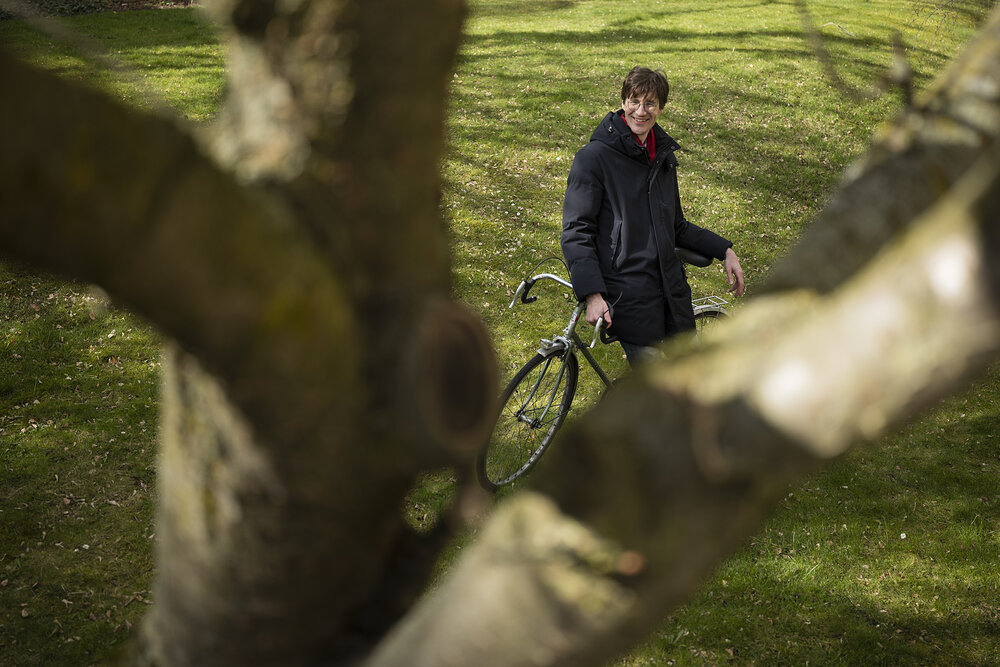
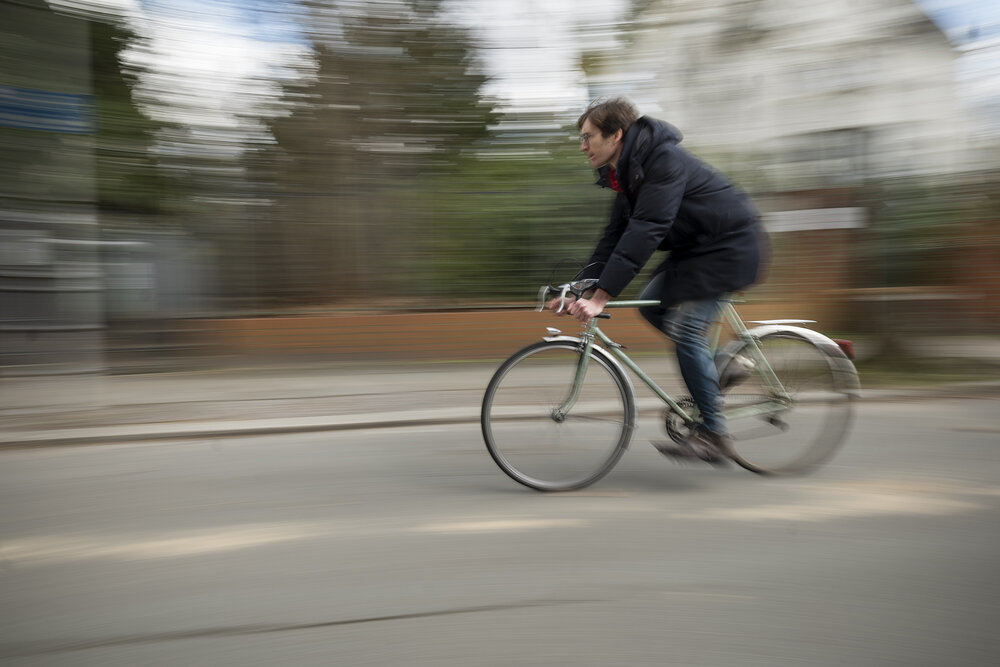
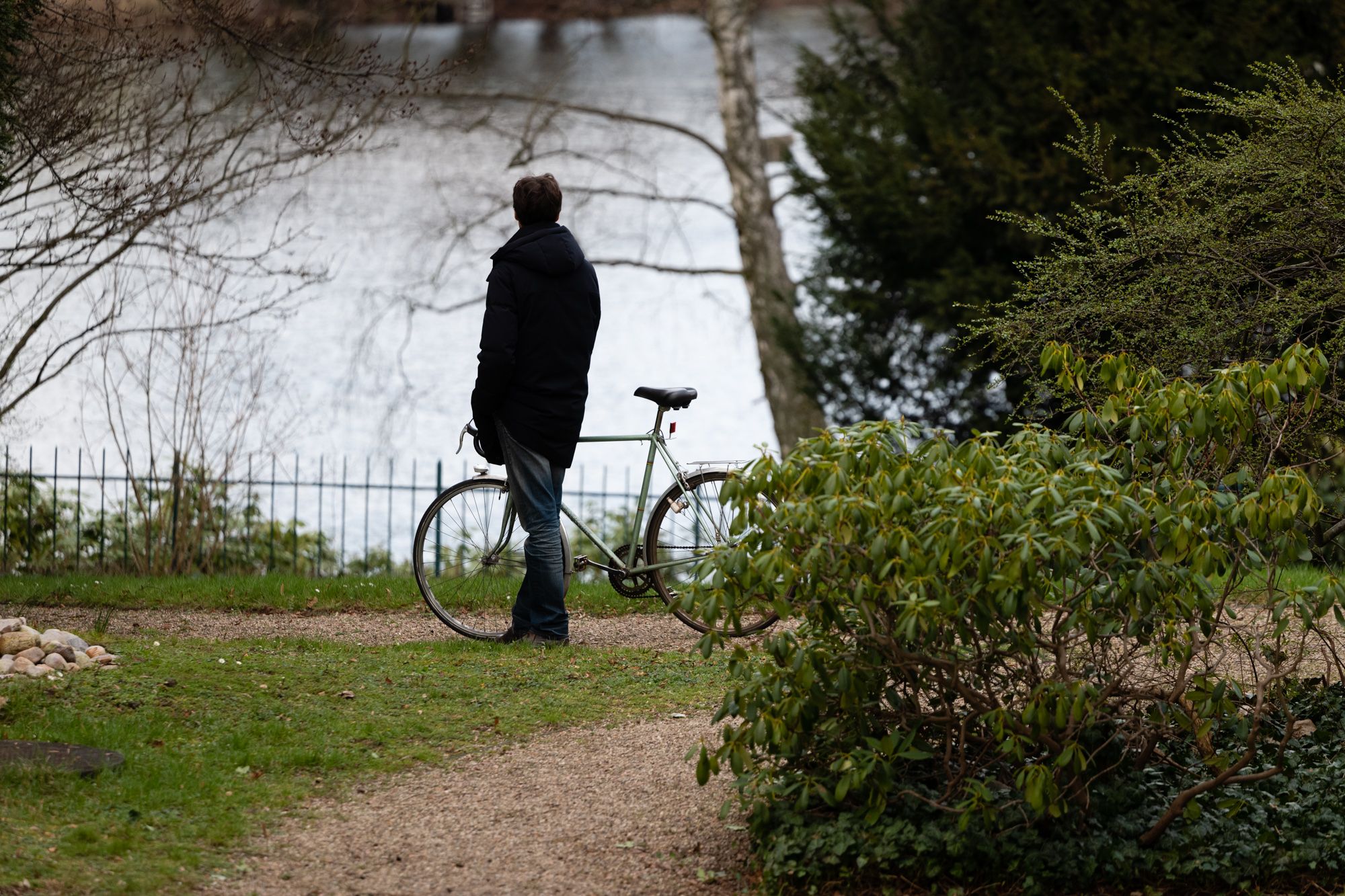
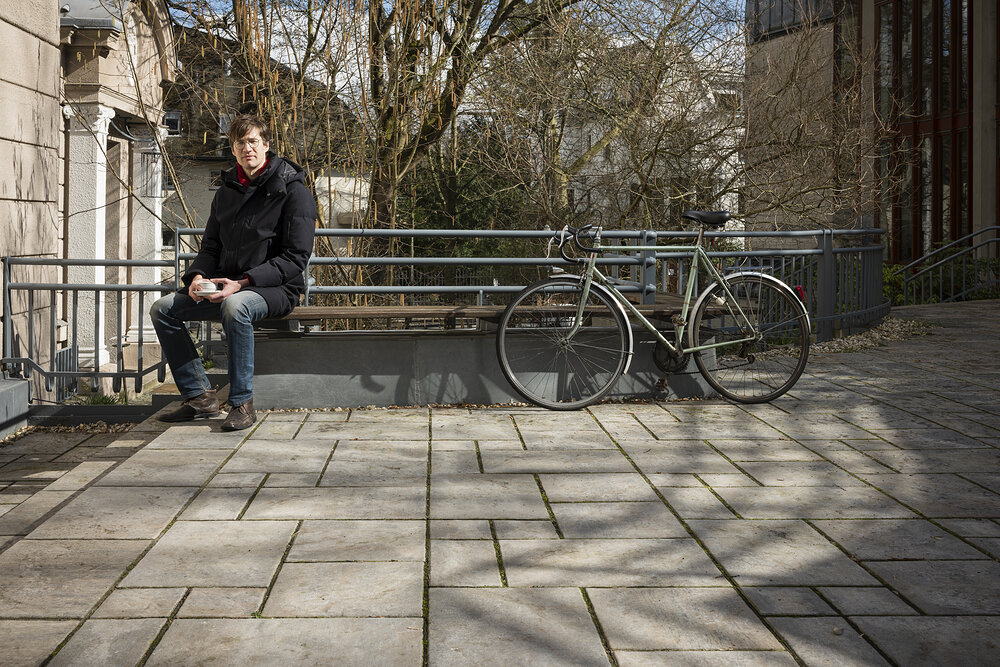
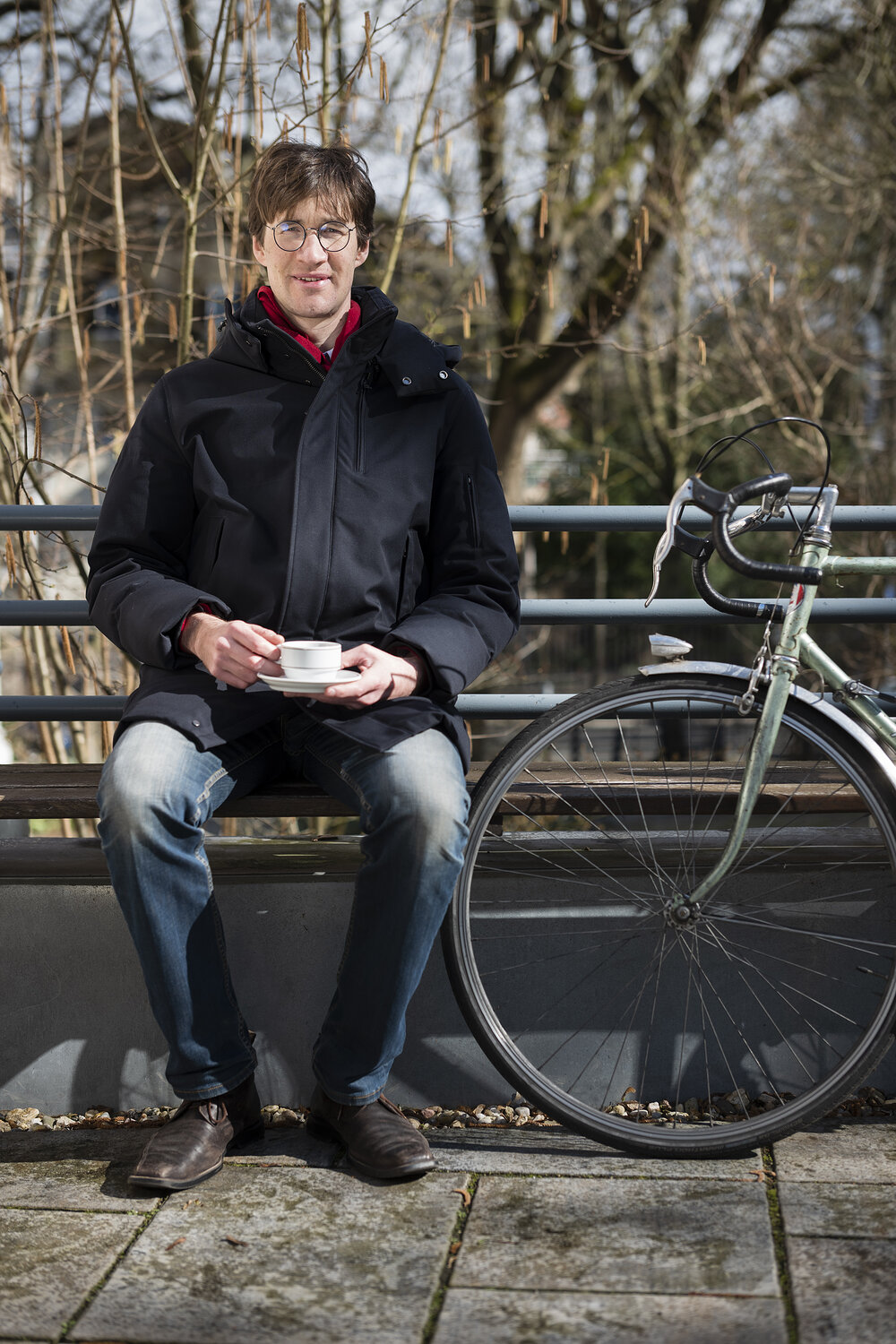
Pottier points to public transport as an obvious example. It is not enough to blame private transport for the higher CO2-emissions and then taxing it accordingly; the first condition must be to give people a choice by permitting them certain alternatives to automobiles. Even if cycling to work is climate friendlier than driving a fossil-fueled car, it is not a valid option for everybody. Reshaping the city and its flows and developing public transports have a much greater potential to organize a no-carbon mobility. And the individuals in charge, whether they are elected officials or CEO of mobility companies, have therefore a tremendous ”power to act”, by making cycling or walking safer and more comfortable, or by offering new, light non-emitting ways of being transported. The ”Power to Act” perspective calls for empirical research on the actual options available to politicians as well as individuals to act in more climate friendly ways. Only then would incentivizing green behavior make any sense at all; only then would it be possible to determine empirically whether these alternatives might indeed be seized upon; and only then would it make any sense to argue meaningfully about whether the assumption of a somewhat “anthropologically” rooted inability of mankind to change course in the face of climate change actually justifies any pessimism.

To begin with, this would mean “more”. More transport infrastructure, more building activity, more mobility. In fact, more investment with the goal of emitting smaller amounts of CO2 at some point. More growth and redistribution to end up doing less damage to the ecological balance of the planet? Many people who are not indifferent to the consequences of climate change have become adversaries of the system and they demonize this old thinking within the growth model. As an economist who consciously chose this discipline after studying mathematics and physics Pottier found both sides have convincing arguments: whether the basic principles of our economic order may be incompatible with the goals of climate policy has not yet been scientifically proven. But he is assured that the fierce and politically loaded disputes are in the way of a proper solution.

Of course Pottier is unsurprised that he is being asked about system change. Anyone who researches something like medieval manuscripts or the nineteenth-century French novel would not be asked it. Nor must he face the question as to whether he is helping to save medieval manuscripts with his own personal lifestyle. After studying mathematics and physics, he decided not to pursue a doctorate in these disciplines because he considered the current problems of humanity as more important than the puzzles of mathematics. We can only hope that Antonin Pottier’s research will develop such that he will once again find the time to help solve also the riddles of mathematics.

More on: Antonin Pottier

Images: © Maurice Weiss

Institute for Advanced Study

  • Press Releases
  • Contact Persons
  • Contact
  • Vacancies
  • Legal Notice
  • Privacy
  • Sitemap

Institute

  • Leadership
  • Committees
  • Contact Persons
  • The Kolleg
  • Initiatives & Cooperations
  • Library

Fellows

  • Fellow Finder
  • Fellows 2025/2026
  • Permanent Fellows
  • Alumni

Events

  • Calendar of Events
  • Workshops
  • Series of Events
  • Three Cultures Forum

Wikotheque

  • Wiko Shorts
  • Lectures & Keynotes
  • Features
  • Köpfe und Ideen
  • Projects
  • Yearbook
  • Zeitschrift für Ideengeschichte

Becoming a Fellow

  • Fellowship Applications
  • Wiko Early Career Calls
  • Living and Working